My Design Process
A SaaS Project
To demonstrate my end-to-end product design process, I’m using this SaaS platform redesign as an example of how I apply user-centred design, structured problem solving, and close collaboration with stakeholders and developers from discovery through to delivery.
Goal:
The goal was to modernise the UI and improve the overall UX of an internal backend system used by staff to manage employee onboarding—such as creating roles and assigning permissions—as well as operational workflows including customer visit records, performance statistics, and loyalty offers.
Role:
Product Designer
Discover
Kick-off & Discovery:
I begin with stakeholder workshops to align on business goals, technical constraints, and project scope. These conversations help clarify priorities, identify success metrics, and surface any limitations early in the process. This establishes a clear direction and ensures everyone shares the same understanding before design begins.
Understanding Users:
I conduct moderated interviews and surveys to uncover user needs and pain points. Methods such as card sorting reveal how users expect information to be structured, especially for navigation. These insights ground the design process in real user behaviour and guide a user-centred approach from the start.
Define
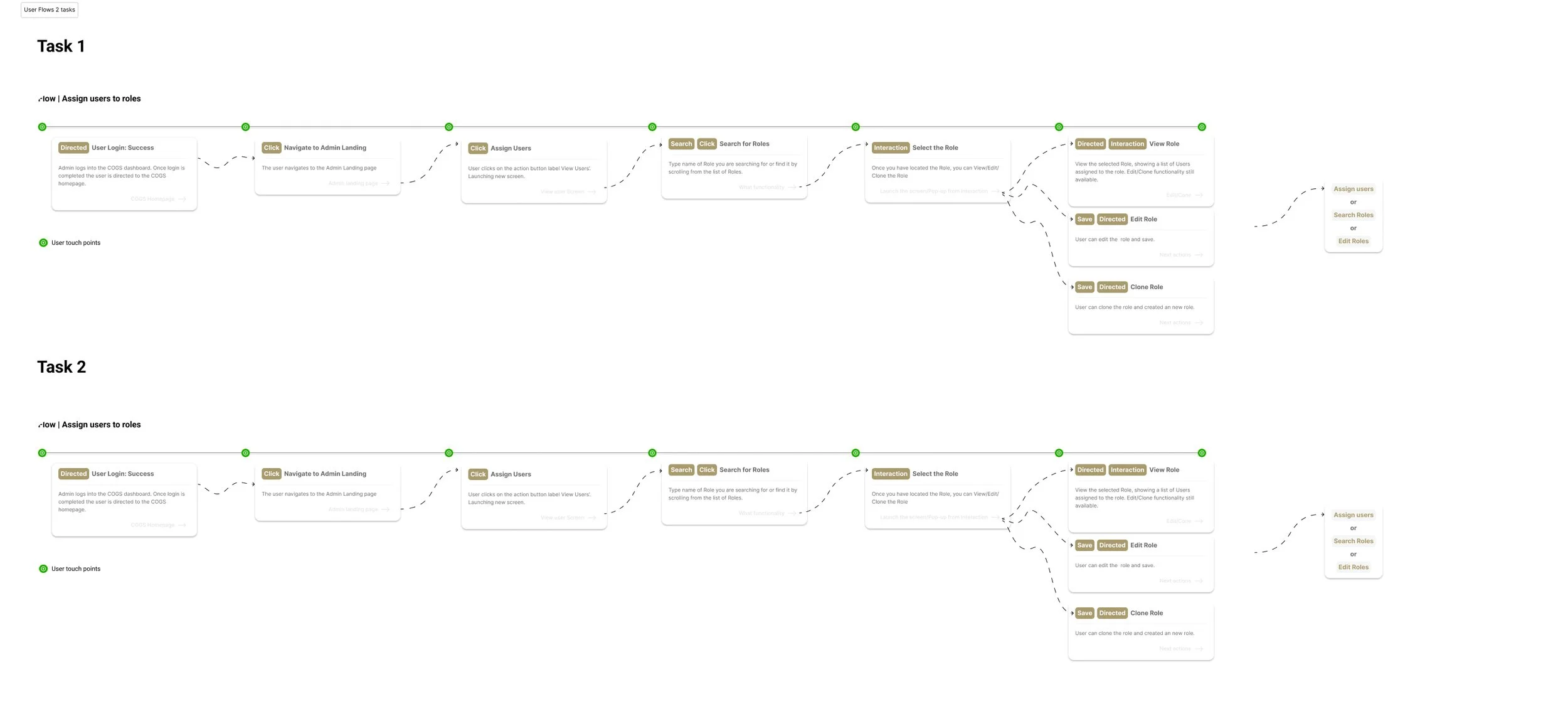
User Flows:
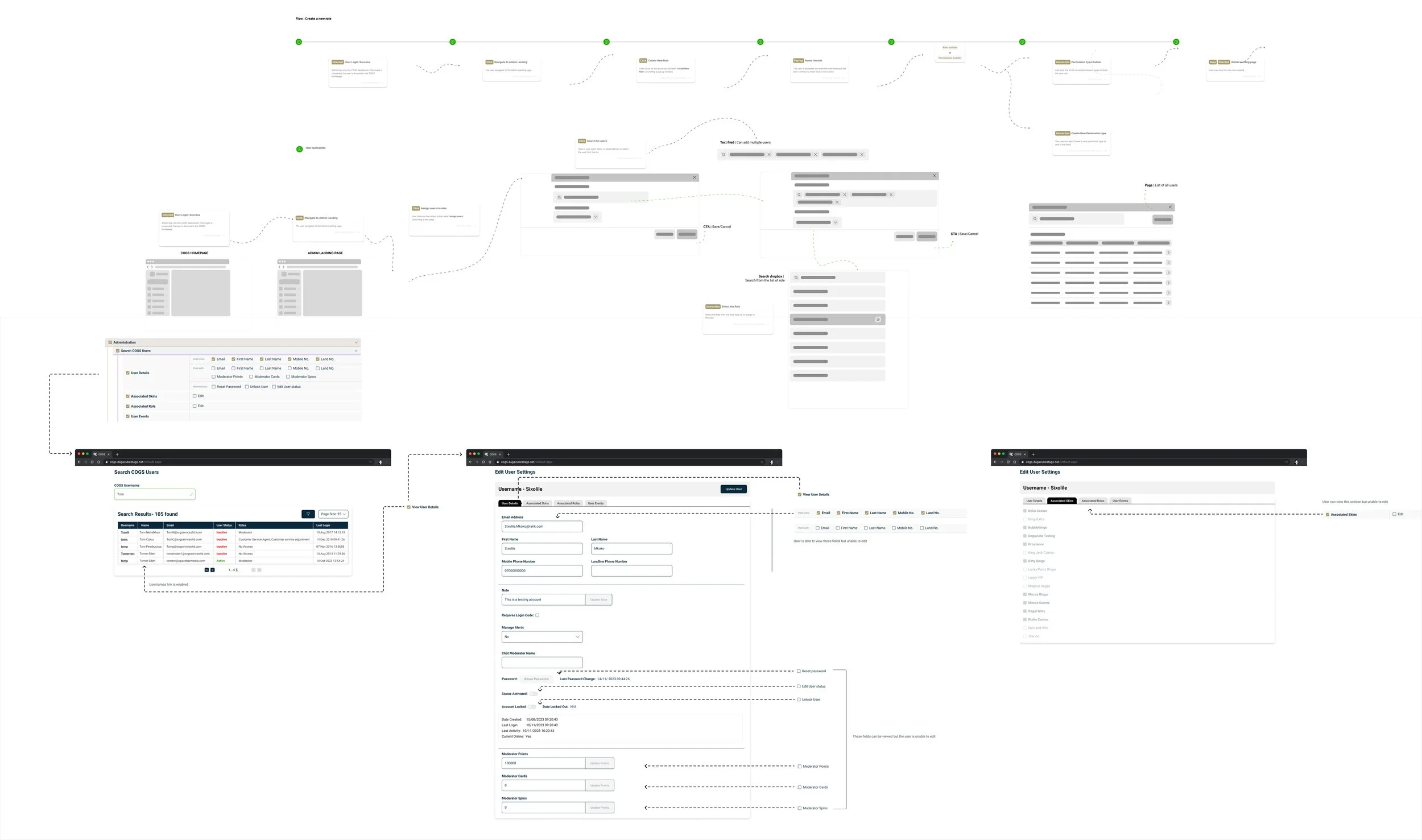
Using insights from discovery and analysis of the existing platform, I map user flows to define the ideal experience. This process helps identify friction points, redundant steps, and opportunities for improvement. The goal is to create a smoother, more intuitive journey that integrates user needs at every stage.
Wireflows & Wireframes:
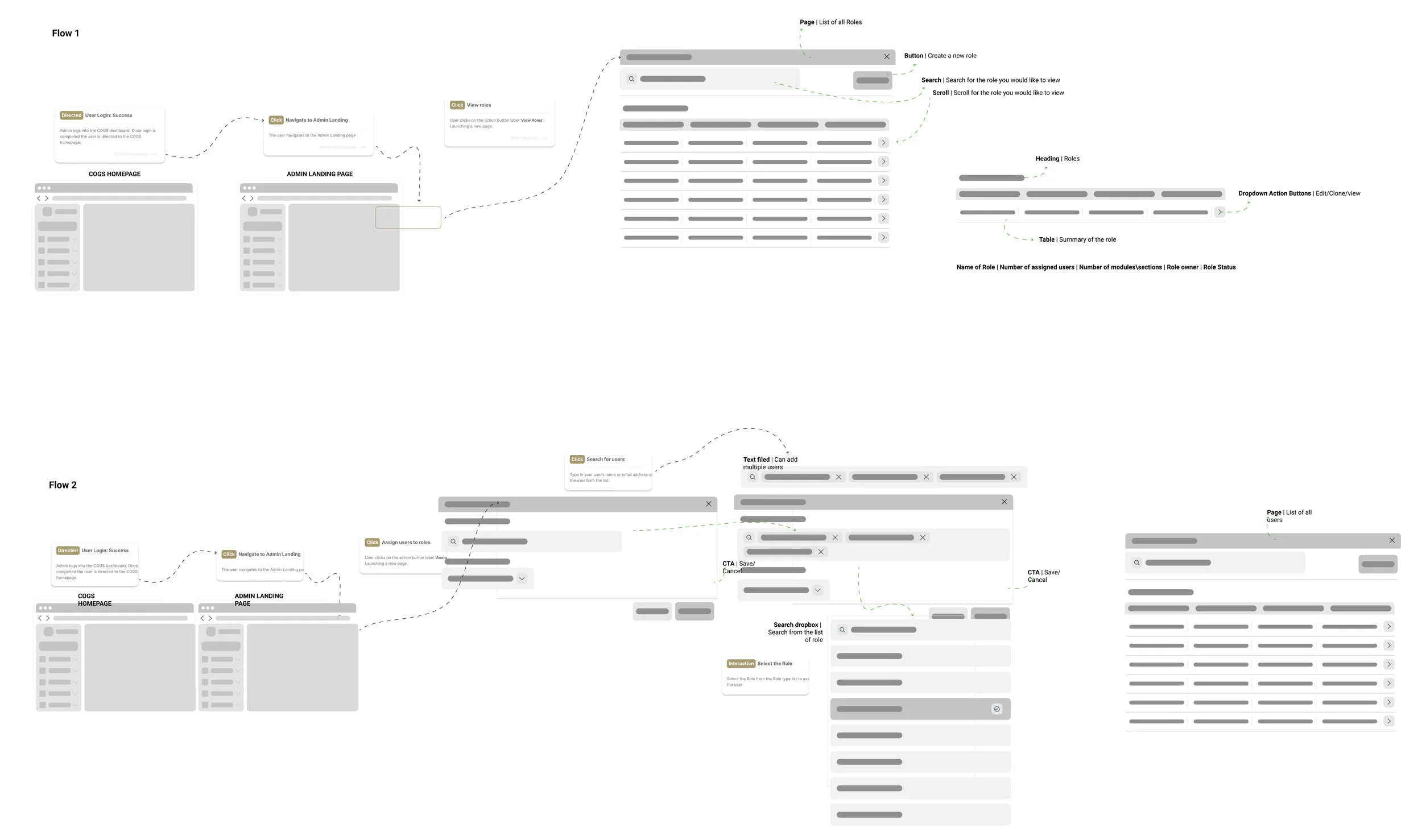
I create wireflows that combine user flows with early interface layouts to test navigation and structure. These are reviewed with users and stakeholders to validate that the journey makes sense before visual design begins.
Once the flows are validated, I develop low-fidelity wireframes to refine layout, hierarchy, and content placement. These are shared with the team to gather quick feedback and align on the product structure.
Design
Design System & Collaboration:
I collaborate closely with developers to align design decisions with the technical framework. Drawing on best practices and guidance from Material Design as a foundation, I adapt components to meet product needs and establish a scalable design system that supports consistency and efficient development.
High-Fidelity:
With the design system established, I create high-fidelity screens, interactive prototypes, and detailed mockups that bring the product to life visually and functionally. These allow stakeholders to experience the product more realistically, making it easier to review interactions, flows, and overall usability before development begins.
Deliver
Usability Testing & Iteration:
I run multiple rounds of usability testing to evaluate the experience with real users. Insights from each session inform rapid iterations, allowing the product to evolve through continuous refinement.
Each cycle improves clarity, usability, and overall experience, helping ensure the final product is intuitive and effective for its users.
Developer Handover & Launch:
As designs move into development, I prepare dev-ready components, specifications, and supporting documentation to ensure a smooth handoff. I review interactions and behaviours with the development team to clarify edge cases, maintain design consistency, and ensure the final implementation matches the intended user experience before launch.
Conclusion
I bring a strong, hands-on understanding of the end-to-end product design process—from discovery and research through to ideation, prototyping, testing, and developer handoff. I’m comfortable navigating ambiguity, collaborating across disciplines, and balancing user needs with business and technical constraints. At every stage, I focus on turning complex problems into clear, thoughtful, and usable product experiences.